
The "Dark" Side to Fireworks
Jul 10, 2026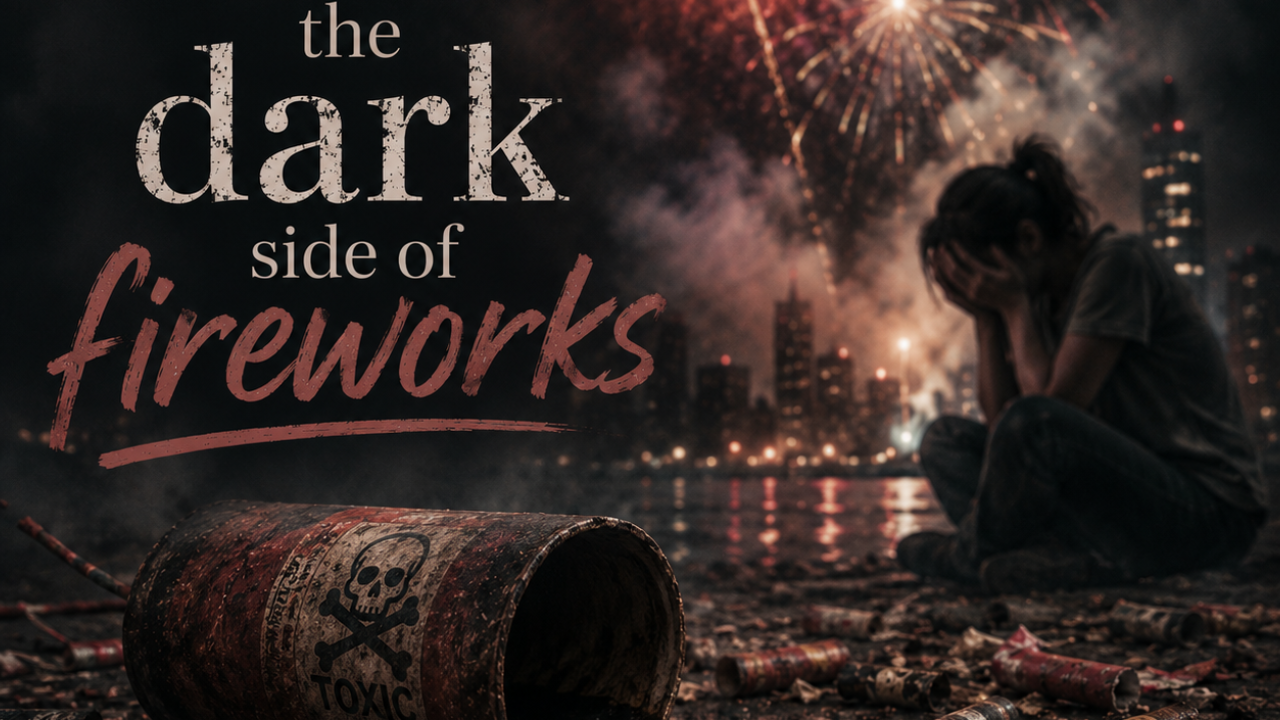
I hope everyone had a great 4th of July celebration! With fireworks being synonymous with this holiday, and often utilized sporadically throughout the rest of the summer, I decided to write a newsletter on these beautiful light shows. Everyone is well aware that directly handling fireworks requires diligent safety measures, as it can be potentially harmful. However, few understand the low-grade toxicity exposure that fireworks present to the human body. These encounters are by no means imminently dangerous, but it is worthwhile to consider the noxious chemicals to which we may be exposed during firework displays because of the significant toxic load we face already in this modern world. Please let me be clear that I am not trying to ruin fireworks for you… please go enjoy these shows throughout the summer! With young kids, I will most definitely be doing so myself. I simply urge you to consider the potential adverse effects from viewing, or even lighting off your own firework display. You should not overly stress about this concept; all I truly desire is for you to be a knowledgeable consumer, just as I encourage for other endeavors, such as making food choices. When we are aware of such toxic exposures, we can take action to mitigate the potential consequences. Similar to the way you may employ certain strategies to offset a hangover after a few too many alcoholic drinks at a social gathering, there are many things we can implement to reduce the toxic burden from firework exposure.
Before we get into the actionable information, let’s quickly discuss the reasons fireworks are more noxious than most assume. As alluded to above, it is not immediately healthy-sabotaging to partake in the firework festivities. Rather, these displays just expose us to various chemicals that spread through the air, at which point we breathe in, giving us a toxic exposure most people don’t consider. We’ve all seen the smoke that floats away and dissipates in the evening sky after a firework goes off. That smoke cloud is loaded with heavy metals and other chemicals contained in the firework. These metals get aerosolized by the heat of the discharge, then can make their way into our lungs via the smoke. Once inhaled, these heavy metals and other chemicals can quietly wreak havoc if unaddressed. This 2020 study illustrates that when these particles get into the lung tissue, it triggers a meaningful change in reactive oxygen species (ROS) within the bronchial epithelial cells, leading to increased irritation and inflammation. The colors of the fireworks give us hints as to the specific chemicals contained within each. The red color in fireworks is made from strontium, a heavy metal associated with increased inflammation, various cancers, and accumulates in bones very easily. Green is created from burning barium, a metal that absorbs radiation and predisposes us to even more toxin buildup. The color blue in fireworks is generated from copper, which is a critical metal when found in its natural forms in food, but often creates toxicity reactions in its synthetic forms. White and silver are loaded with aluminum, which is a known neurotoxin to the human body. Furthermore, lead often tests extremely high in most firework smoke. In this 2019 study, researchers measured the content of airborne lead particulate in one Chinese city over the course of one year, evaluating its changes throughout the seasons and various events. Firework displays were shown to be single biggest trigger of increased airborne lead pollution throughout the entire duration of the study. Being one of the most potent heavy metals, lead tends to exacerbate the adverse effects of many other heavy metals, making inhaled firework smoke even more toxic.
I cannot reiterate it enough that I am by no means saying you should not go see fireworks because of this reality though. Rather, you should enjoy the show while considering taking simple precautionary measures to mitigate any associated adverse effects. It is important to note that the following are most pertinent for sensitive individuals. This includes people with histamine intolerance, frequent allergies, those who have difficulty tolerating strong smells and fragrances, like perfume, and individuals who just seem to be set off by everything. Personally, I tend to always include children in this group, even if they don’t possess any of the above characteristics. Their systems are under-developed and they’ve been born into the chemical cesspool that is the modern world, putting them at a disadvantage from a toxic load standpoint. Efforts to reduce toxin encounters from fireworks may seem futile as the firework smoke dispersing into a vast sky looks inconsequential. However, this 2016 review reports that the airborne particulate matter (aka pollution) following a fireworks display is significantly elevated for a short period of time compared to non-firework skies. The authors go on to describe the elevation being substantial enough to pose adverse effects. With that being said, here’s some practical steps to consider in conjunction with your firework shows this summer:
- Consider binders following fireworks: I’ve discussed binders many times before. Various compounds found in nature are known to be “binders.” Just as the name implies, these compounds latch onto heavy metals and other chemicals, which helps to more seamlessly excrete these toxic products from the body. My go-to’s are Takesumi Supreme and Quicksilver Scientific Universal Binder.
- Get your minerals up before and after, just not at the same time as binders: Heavy metals compete with essential minerals inside our bodies. More minerals means less heavy metals can park themselves in our tissues. Just be sure to take binders away from minerals and food, as the binders are nonspecific and will steal some minerals along the way too. Thus, taking them together would defeat the purpose of the minerals. VerVita Cir-Q-Tonic is loaded with minerals that are crucial for our body’s detox processes. Quicksilver Scientific Catalyzed Mineral Complex is a fantastic catch-all product for mineral intake as well. Thera Supreme is also a great whole-food source for various minerals. Along this theme, eating more mineral-rich foods, like fruits and vegetables, is good practice too.
- Eat more foods with binding potential: Many foods contain phytochemicals that act as binders, such as beets, garlic, onions, okra, and aspargus, among others. Fruit pectin, from the skins of apples and citrus fruits, like lemons and limes, are potent binders too. Furthermore, certain herbs and spices, including cilantro and parsley, are well known binders.
- View the show from more of a distance: The closer you get, the more potential for inhaling the heavy metal-dense smoke. Standing farther back can significantly reduce the toxic load accrued from a fireworks show.
- Remove and change your clothes as quickly as possible when you get back home: The smoke will also fall from the sky and get onto your clothes, potentially posing issues to your health well after the experience. The firework explosion generates tiny particles of heavy metals that can be absorbed through the skin once on your clothes. Changing your clothes upon returning home reduces this risk.
- Check in with your breathing during the show and assure you’re nasal breathing; check the kids too: The mouth is meant for digesting food and communicating. It deals with food-borne microorganisms and chemicals, but is not as equipped to handle airborne toxins. Your nose is built for this endeavor. The hairs inside our noses are there to catch and trap many of these airborne particles, reducing their access into our airways and bloodstreams. You can take this a step further by performing nasal irrigation, such as with a neti pot, upon returning home in order to flush the nasal cavity of any inhaled particulate that is still sticking around.
- Consider a sauna the next day: This can help you sweat out any heavy metals and toxins to which you were exposed during the firework show.
- Don’t stress it: Don’t overthink it. Go enjoy the show. If you are still reading at this point in the newsletter, you’ll have the luxury of all the above strategies in your toolbox to employ during your next firework experience!
As mentioned earlier, sensitive individuals should be more diligent with these offsetting strategies. In reality, most of the above are low hanging fruit-type of actions to take following fireworks, so the barrier to entry is minimal, and thus, feasible for everyone. The majority of them just add another layer of thought to things you’d normally be doing day-to-day. Others take minimal time and effort to mix into the daily routine. Knowledge is power, so understanding these tidbits about fireworks and subsequent lifestyle modifications make this summer pastime a healthier endeavor for you and your family. Ultimately, please don’t think this a recommendation to live in a bubble. There are plenty of other exposures in today’s world that pose much more of an imminent health risk. Fireworks should be an enjoyable part of your summer, as the actual danger is minimal in the grand scheme. Nevertheless, the toxic load in our bodies comes from the cumulation of all of our exposures each and every day. Anytime we have the power to mitigate these exposures, I believe it is always in the best interest of our long term health to do so!
Stay Connected With News and Updates!
Join our mailing list to receive the latest news and updates from our team.
Don't worry, your information will not be shared.
We hate SPAM. We will never sell your information, for any reason.
