
Top 6 Unconventional Supplements to Consider in 2026
Jan 16, 2026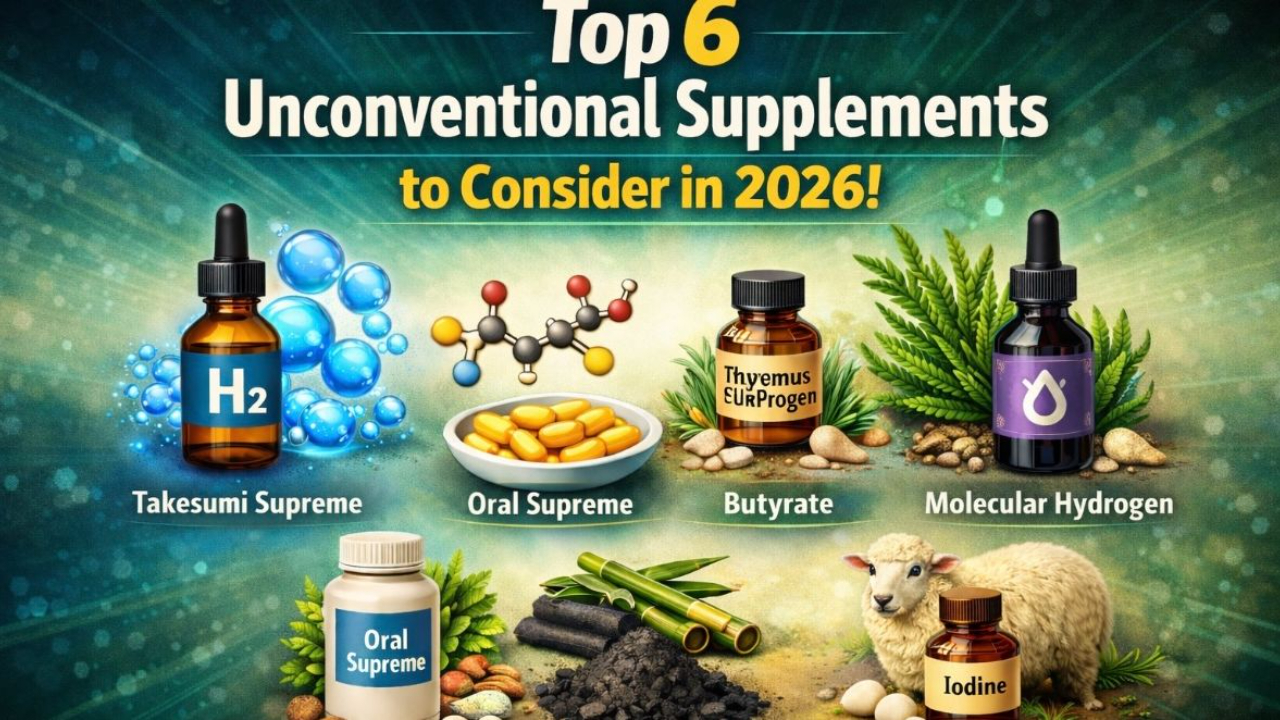
We’re just over 2 weeks into 2026, and resolutions are under way. As everyone looks to enhance their health, supplements have become an increasingly common strategy to boost wellness. With a booming supplement industry, there are numerous mainstays on the market, like vitamin D and magnesium, that are abundantly available and have been tried by many individuals. Today, I want to discuss my top 6 less traditional supplements to consider adding into your regimen in 2026. Here we go:
- Molecular hydrogen: I wrote an entire newsletter about the wonders of molecular hydrogen a couple months ago, so I won’t go into great depth on its benefits during this rendition. Nevertheless, molecular hydrogen is quite literally the simplest supplement chemically, yet extremely versatile. It can act as a potent antioxidant, helping to neutralize free radicals and mitigate inflammation. Furthermore, molecular hydrogen also possesses the power to operate on the opposite end of the chemical equation as a strong reducer of such internal reactions. This means that molecular hydrogen is a supreme bio-regulator, assisting the body in its natural endeavors to balance chemical stress at the cellular level, and thus enhancing our capacity to return to a state of equilibrium. Basically, molecular hydrogen is a fantastic tool to combat today’s world of environmental toxins, chemical-ridden food, and constant stressors that are continually hijacking the state of harmony in which the human body thrives!
- Butyrate: Gut issues have been skyrocketing for years. The medical system seems to be baffled, as treatments act as glorified band-aids and often trigger new symptoms to pop up. Leaky gut is a diagnostic term (it technically is a symptom of a larger issue) that used to be shunned by the conventional medicine, but has recently become more widely accepted. Even though providers are conceding to the presence of leaky gut, there is still pervasive uncertainty about best treatment options. The reality is that many people will respond poorly to standard treatment options because they have lost the butyrate in their digestive tracts. Butyrate is a short-chain fatty acid (SCFA) that is pivotal to gut health. It is a post-biotic, as it is produced by the beneficial bacteria in our gut when ferment the fiber that we consume in our food. The butyrate is then used as fuel by our colonocytes (aka cells of the colon or large intestine), thus strengthening the integrity of our gut lining, reducing inflammation in the digestive tract, and improving metabolism and assimilation of nutrients. Butyrate even plays a major role in the immune response within our guts. Furthermore, butyrate also acts like a prebiotic, as it subsequently nourishes these probiotic microbes in a positive feedback loop. As you can see butyrate is not only critical for digestive health, but integral for systemic health of various other bodily systems. As alluded to above, our good guys in the gut generate butyrate in response to consuming high-fiber foods. However, we also attain butyrate directly through butter and other dairy products due to the presence of naturally-occurring probiotics within these types of foods. As modern diets have become less nutrient dense, the butyrate has been stripped from the daily nutrition of many humans nowadays to some extent. Additionally, we live in a world inundated with environmental toxins that have infiltrated the food supply, making their way into our guts, necessitating the need for more butyrate today. Many illnesses and conditions are being linked to low butyrate levels, and there’s a physiological reason for these connections. The large intestine in meant to be a largely anaerobic environment, meaning it houses very little oxygen, whereas the small intestine thrives on much more oxygen content. The native bacteria to each region of the digestive tract function accordingly (i.e microbes in the large intestine are mostly anaerobic in nature). Without sufficient butyrate in the system, our colonocytes, which prefer butyrate as fuel, will shift to alternative sources as a backup system. The substitute fuel source is typically glucose. Although it does work to provide adequate fuel to these colon cells, it also pulls more oxygen into the large intestine. As a result, aerobic microorganisms that would typically be unable to survive in the large intestine then make there way into an area of the digestive tract that is unaccustomed. This leads to microbial imbalances, which further disrupts the health of the digestive tract and subsequently impacts other body functions and systems. Metabolism becomes disturbed. Immune function gets sluggish. Nutrient absorption and assimilation are impacted, triggering reduced energy throughout the rest of the body. Does this sound like a common occurrence in today’s humans?!? Supplementing with butyrate (I like BodyBio Sodium Butyrate) is a fantastic option to offset this modern circumstance. Yes, it is always best to modify the diet first and foremost in an attempt to make these physiological modifications. Nevertheless, humans today are fighting an uphill battle in this regard. Hence why I believe butyrate is going to be an all-star of a supplement to add in 2026!
- Iodine: Iodine is arguably one of the most misunderstood micronutrients. It is a trace mineral naturally found in the earth, primarily in soil and seawater (hence seafood being a great source!). Iodine is one of the main ingredients for your body to produce thyroid hormone, meaning is directly helps to regulate our body’s metabolism. The demand for iodine in the human diet has been well documented and understood for a long time. This is exactly why iodized salt became a thing in the first place (See the story here). However, despite the universal introduction of increased iodine in the form of salt, supplemental iodine has remained somewhat of a controversial topic. The reality is that iodine deficiency is making a comeback as people turn away from table salt, soils are becoming more nutrient-depleted, and our seas are undergoing more pollution (See here and here). Albeit, I’m a fan of avoiding table salt, as it’s heavily refined and processed, leading to contamination with heavy metals and other chemicals. Opting for more natural salts, like Himalayan or Redmond’s Real Salt, are better options for mitigating this adulteration of salt. However, these more authentic salts are not fortified with iodine. With depleted iodine in our environment, we find ourselves in quite the predicament; replenishing iodine without needing to turn to impure table salt. This is where supplementation can serve as a perfect gap-filler in this regard! Nevertheless, iodine is a trace mineral that is required in smaller amounts, so we do need to be careful with iodine supplementation. I much prefer iodine in the form of concentrated seawater, such as Quinton Minerals or Trace Minerals Research ConcenTrace, or other food-based supplements, like kelp or seaweed products. In more significant cases of iodine deficiency, utilizing supplemental iodine, usually in the form or potassium iodide can be helpful, but this type of intervention should most definitely be overseen by a healthcare provider who is well-versed in this area (especially in the case of a Hashimoto’s diagnosis, as supplemental iodine can actually worsen the condition by triggering a sort of log jam in the body - please work with a provider for sure in this situation, and remember this is not medical advice, just a consideration for asking the potential question!). As with everything, testing to assure you have a true iodine deficiency is best practice. A full thyroid panel can give you solid indications of iodine need, but a hair mineral analysis will be your most accurate measurement of bodily iodine levels. Regardless, there are many positive findings coming to light (like this case report on reversal of cysts in the breasts using therapeutic doses of iodine), which is the main reason for including iodine in my top 6 supplements for CONSIDERATION (emphasis on this term - not saying you all should go and take it now!) this year. Like the others on this list, the attention on this supplement is directly linked to the disturbance of our modern environment in combination with the current status of human health.
- Oral Supreme: A significant, but under-appreciated issue that modern humanity faces is poor oral health. The bacterial balance within the mouths of many people today is considerably disrupted. It has led to more rampant oral diseases, including those of both the gums and teeth, poor nutrient absorption, dysfunction upper respiratory patterns, and dysregulated immune systems overall. Even though oral care routines involving brushing and flossing have become mainstream in our modern world, issues with human mouths have increased exponentially. Recent research indicates that a common finding among humans in today’s world is a distorted oral microbiome, similar to the way the typical bacterial colonies residing within our guts have become increasingly imbalanced in today’s population. Oral Supreme is an essential oil blend designed to facilitate enhanced oral health, largely by aiding your body in killing the bacteria that are not customary to the oral cavity, all while sparing the beneficial microbes of the mouth. Oral Supreme is a bit of an atypical supplement, as it is comes in liquid form and is intended to be utilized by rubbing along the junction of your gums and teeth before and after brushing. Nonetheless, I believe Oral Supreme falls into my top 6 in 2026 due to the exponentially growing imbalances in the oral cavities of modern humans.
- Takesumi Supreme (carbonized bamboo): As I’ve discussed many times before, our modern world is flooded with man made chemicals and environmental toxins. Even though the human body possesses natural mechanisms to neutralize these noxious substances and expel once they get inside, our detoxification pathways are overwhelmed on a daily basis in today’s world. For this reason, keeping a binder on hand or steadily in the regimen is a great way to support our body’s natural detoxification processes. A binder refers to various compounds, such as charcoal, bentonite clay, or other substances, that are naturally occurring on earth and bind to chemicals, like heavy metals. They essentially act like a sponge, so once ingested their particles will grab onto these unwanted substances within the body (similar to chelation therapy). The only issue is that binders are non-selective. They will also bind up some of our vitamins and minerals to which they come in contact. Takesumi, or carbonized bamboo, is a more gentle binder than many others on the market, meaning it is less likely to deplete you. In addition, Takesumi is also a quality source of its own trace minerals, so you could think of it as replenishing some of what it takes in terms of the necessary micronutrients. Nevertheless, for this reason, I don’t think use of binders every single day for an extended period of time is necessary in most cases. You can certainly do a more gentle binder, like Takesumi, daily, but I tend to think it is better to cycle in and out, or just commit to a couple days per week. Additionally, while many supplements are recommended to take in conjunction with food, you should consume Takesumi away from food, as it can bind up some of the breakdown products of food that our bodies are desiring to breakdown and absorb for its nutrients. Ultimately, more aggressive binders are superb options to be used as more of a therapeutic agent, whereas Takesumi being more synergistic with the body makes it a wonderful choice for maintenance and more regular use.
- Ovine (sheep) thymus: Immune systems are a mess in today’s world. The thymus is a gland that mainly produces immune cells. Humans possess thymus glands too. In humans, the thymus is largest in children, and gradually shrinks as you age due to the maturation of the immune system. The concept behind consuming glandular supplements (aka organs from another animals) is that the micronutrient content of that specific organ directly stimulates and nourishes that particular organ within our bodies. This has been supported over and over again in the literature. Ovine thymus contains a variety of beneficial compounds, like peptides and other signaling molecules, to help support a healthy immune response. It has been shown to work both ways; it can stimulate an under-performing immune system, while also toning down an overactive immune response in the case of autoimmunity (Check it). Thymus seems to work best when taken regularly for an extended period of time, rather than acutely as an immune-booster during acute illness. This makes it a fantastic option to add to a supplement regimen through the winter months if desired. My favorite is Thymus Supreme from Supreme Nutrition Products if this seems like something of interest to you, but there are other high-quality options on the market too.
Creatine would fit well on this list, but it has boomed in recent years and subsequently has already been added by many, so it is now more mainstream. I decided to go with 6 supplements that are unconventional and less popular as we begin 2026. Due to the untraditional nature of the above, I wanted to provide more thorough analyses in the event any of these supplements strike a chord with you! As always, most of the supplements mentioned are available using the links below. I must reiterate that this is not medical advise, nor a recommendation, but rather simply options to consider in light of physiological and environmental factors affecting humans nowadays. Please do your own research, consult your health providers, and utilize critical thinking and judgment before diving in head first!
Stay Connected With News and Updates!
Join our mailing list to receive the latest news and updates from our team.
Don't worry, your information will not be shared.
We hate SPAM. We will never sell your information, for any reason.
