
Stay Healthy By Getting Cold This Winter!
Dec 18, 2025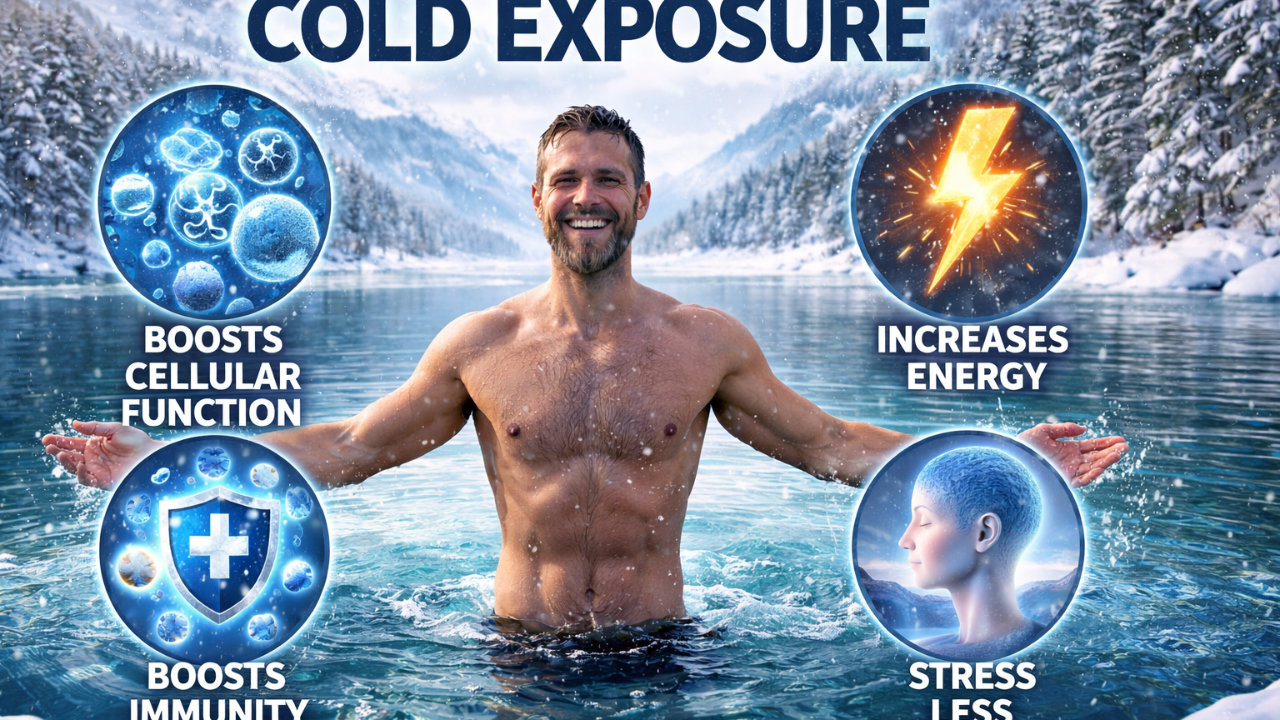
It’s that time of year. The clocks have jumped back, making it depressingly dark in the late afternoon. The cold weather is fast approaching. Whether you want to admit it or not, the thought of “flu season” has parked itself somewhere within your brain. There’s no doubt that rates of sickness elevate during the winter months. The reason for this occurrence is multifactorial. We won’t get into all of them, but one in particular that we’ve always heard is that cold temperatures dampen our body’s immune response. While there is some merit to this statement, I believe there is much more to the story in this regard. Before we get into specifics on the immune system, we first need to discuss some basics as it relates to the interaction of cold temperatures and light for humans. During winter, the sun gets farther away, decreasing the amount of UV light that can reach our skin. Since humans have been living and thriving in cold climates for hundreds of thousands of years, we have evolved with biological adaptations to cold weather. Cold temperatures hitting our skin triggers the body to shift gears physiologically. Your body registering the cold more regularly stimulates the cells to become more efficient with less sunlight. Your mitochondria, the energy centers of our cells, are normally activated by sunlight; it is quite literally photonic currency from the sun’s rays that our mitochondria then converts into energy for all of our cellular functions (don’t forget, we are solar animals, not nocturnal ones!). This would indicate that the mitochondria naturally get somewhat depleted in the winter as a result of this sunlight shortage. Thus, the energy deficits we all experience in the colder months do have a physiological source. However, when appropriately exposed to the to cold temperatures, the cells of the human body adapt and switch to a lower light threshold, meaning cells can do more will less light; ultimately, this reduces energy demands on the mitochondria (Check it here). Accordingly, this decreased need for energy expenditure allows our cells to maintain higher levels of function in the wintertime. Humans throughout history have always slowed down mildly in the colder climates, but homo sapiens have never been hibernating animals. Therefore, we can conclude that it is pivotal for our cellular physiology to sustain a notable amount of energetic output during these times. It is apparent that the key prompt for this biological adjustment process is the cold temperatures on our skin. Furthermore, it has been observed in many other animals residing in colder regions that their mitochondria and cellular function have adapted to be more flexible and efficient as a result of their regular exposure to cold (See one example here). Essentially, their mitochondria can do more with less resources in terms of generating energy currency for the cells to perform necessary functions. Amazingly, humans seem to possess a certain level of this ability too. The problem for humans nowadays is that we just don’t train this physiological process in order to express it to its fullest capacity… We go from one temperature-controlled indoor space to another, and for the brief time we actually spend outside, the clothing technology has advanced to such a degree that humans pretty much never have to be cold. This modern reality substantially blocks the trigger for this vital biological switch that is meant to be ongoing as we speak inside the cells of humans living in New England as we speak.
So, how does this relate to our immune system?!? Well, like all other systems of the human body, our immune cells rely heavily on mitochondrial activity for efficient function. The mitochondria of human cells are actually of bacterial origin, so they are by nature strongly linked to our immune system, and have been shown to be critical in the immune response (Alluded here). If our mitochondrial and cellular physiology are substantially regulated by exposure to cold temperatures, especially in the winter, but we never allow our body to get cold, you could image how this could be problematic. Consequently, most humans in today’s world have an internal incongruence occurring during the winter months. Of course, this goes more for individuals who live farther from the equator where winter is characterized by colder climate and reduced sunlight. Our winter selves are operating with cells that are seeking sunlight as its preferred mitochondrial fuel source. Yet, due to the inherent scarcity of the sunlight during these months, the mitochondria are craving something that is deficient and seeking an additional source of fuel. Cold could serve that function. However, we live in such a cold-averse culture these days, so people are left fuel tanks that are running on empty throughout the winter. Rather, what we should be doing is leveraging cold to keep our bodies firing on all cylinders throughout the winter. Just as sunlight is abundant through the summer months, the opportunity for cold exposure is plentiful in the winter. Using the cold in an intelligent manner can not only maintain a strong immune response, but has the capacity to enhance mitochondrial efficiency overall for optimal bodily performance throughout the dreary months of the year.
There’s a few things to consider when utilizing cold exposure in order to promote this physiological switch for wintertime:
- Cold air and/or water both work: I’m a big fan of cold water immersion and cold showers personally, but I totally understand the resistance to those options. Cold air can be just as effective. Going outside for a few minutes in the morning with minimal clothing, or going on a short walk without a jacket are both viable strategies for exposing your body to cold temperatures.
- Start your cold exposure practice well before winter arrives: As soon as the weather begins to change in the fall, it’s time to start implementing regular cold exposure; even if its only colder mornings. This is just logical, as this gradual subjection to cold temperature is exactly how our ancestors would have experienced this transition. Thus, our cells are evolutionarily adapted to making this physiological alteration progressively. Since we’ve already been experiencing chilly mornings and colder temps midday, this newsletter is probably a few weeks too late, but better late than never!
- Less is more; colder does not necessarily equate to more benefit: Don’t worry too much about specific numbers. If the air or water feels cold to you, then it’s likely cold enough to trigger the necessary cellular adaptations. The sensation of cold is relative to the individual.
- If you typically struggle with cold, prioritize more sensitive areas for isolated exposure: There’s some interesting research out there including simply splashing cold water on the face only to facilitate increased parasympathetic activity, which accompanies efficient mitochondrial functioning. Even though it may not be as effective as cold exposure to larger surface areas of the body, it is still a stimulus to seems to elicit positive changes. Letting certain areas of your body, like the face, armpit, feet or groin region, experience cold temperatures regularly is a great way to prompt our cells to be more cold-adapted. Cells in more sensitive body parts, like those listed above, are usually more responsive to such physiological alterations, even with less stimulation.
- Consistency is key: Like most bodily adaptations we attempt to achieve, regular frequency is the most important factor. Find the frequency that works for you and is realistic for you to sustain. This is how we assure we’re attaining optimal results in your given situation.
- Gradually increase exposure leading up to the winter: With the consistency factor being said, as New England residents, we also want to consider progressive overload as we trek into the colder months of the year. Don’t just do the same exact thing everyday. Start small, and work up to longer exposures, increased temperatures, and various methods for subjection to the cold. This is the best way to ramp up our immune function and make sure the cells are adequately adept at utilizing cold as the fuel for energy production.
- Cold exposure when already actively sick is probably not the time to push the boundaries: In some cases, acute cold exposure has been shown to briefly dampen the immune response. Although other studies illustrate a boost in the immediate reaction of immune cells and the long term benefits to our immune efficiency with regular cold exposure is well reported (See here), a distracted immune system that is in the act of fighting off an acute illness does not pair well with excessively cold temperatures in my opinion. This is not to say you cannot let yourself get a little cold when battling one, but we should probably avoid more extreme exposures that pose more hormetic stress to the body, like cold plunges and full body cold showers, during these times.
Ultimately, don’t fear the cold weather as we quickly approach the winter season! You can leverage the cold to fuel your cells in order to keep your body thriving throughout the next few months!
Stay Connected With News and Updates!
Join our mailing list to receive the latest news and updates from our team.
Don't worry, your information will not be shared.
We hate SPAM. We will never sell your information, for any reason.
